My First: Portable Phone Charger
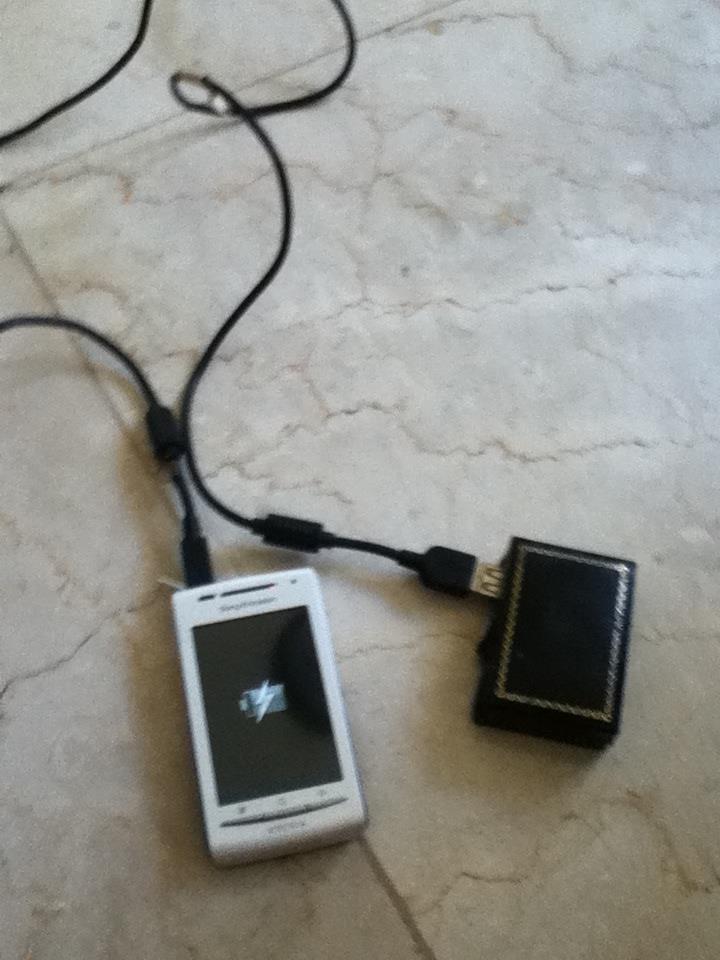
In 2011, I got my first smartphone, a Sony Xperia X8. It was an amazing device at the time, with plenty of fun applications and customizable widgets. The battery typically lasted 4 hours with regular use, or 6 hours if I was being conservative. This wouldn’t have been an issue if I had reliable access to power outlets.
However, the small city I lived in frequently experienced power outages that could last up to 48 hours. If my battery was at 10%, I would be in for a very long weekend.
Facing the threat of boredom and being cut off from the internet, I decided to tackle the ambitious project of building an alternative power source.
Getting Started
The requirements of the project were simple. The first was that it had to be able to charge my phone. The second was that it needed to be USB-A compatible. The third was that it needed a switch.
Without any experience or guidance, I took to the internet to look up the basics.
Do all phones charge the same way? How to get constant 5v from a 9v source? What were resistors? capacitors? an LED? Do resistors have polarities? What are the alternative components I can use? etc.
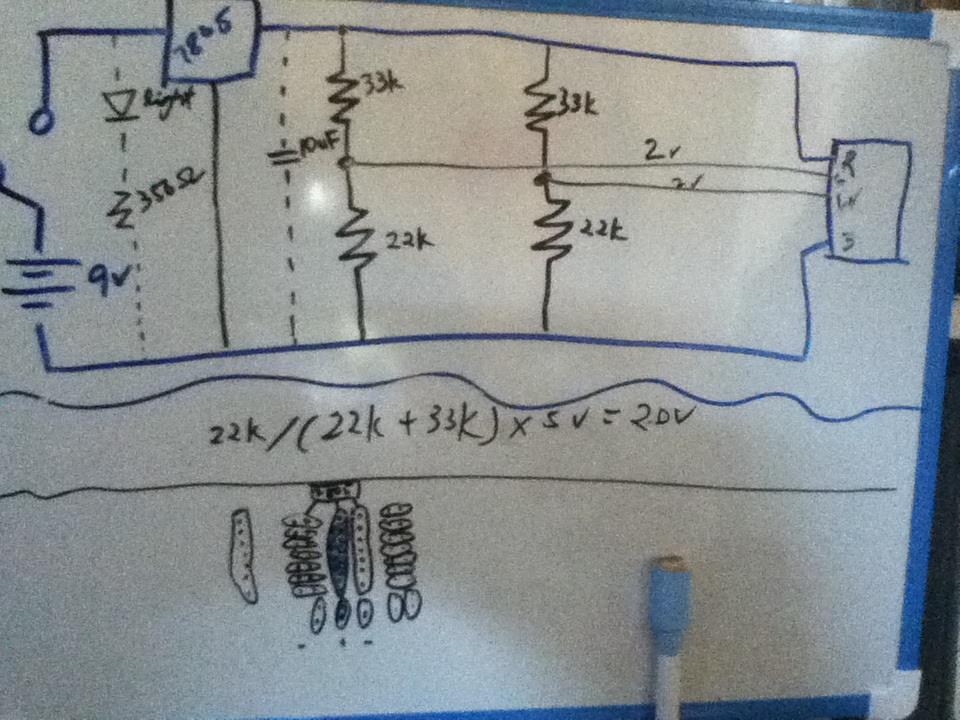
With the information I gathered, I was able to draw out my very first inefficient but functional schematic with the components available around my area.
Smart phones at the time had a rudimentary safety requirement where in it needed 2v to be sent into both data lines before it would allow the device to charge. To meet this requirement, I used the voltage divider formula to drop 5v down to 2v for the data lines.
Putting it Together
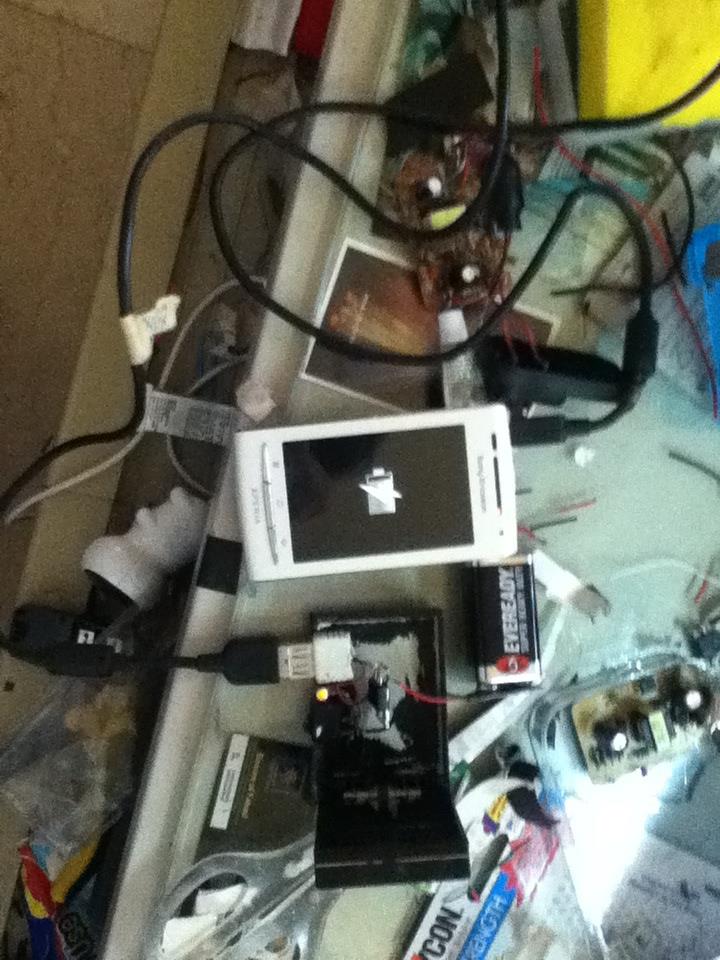
Despite its simplicity, finding the right parts for the project was difficult. A female USB-A had to be extracted from an extension cable, the LED was taken from old chargers, and the enclosure was a repurposed ring box.
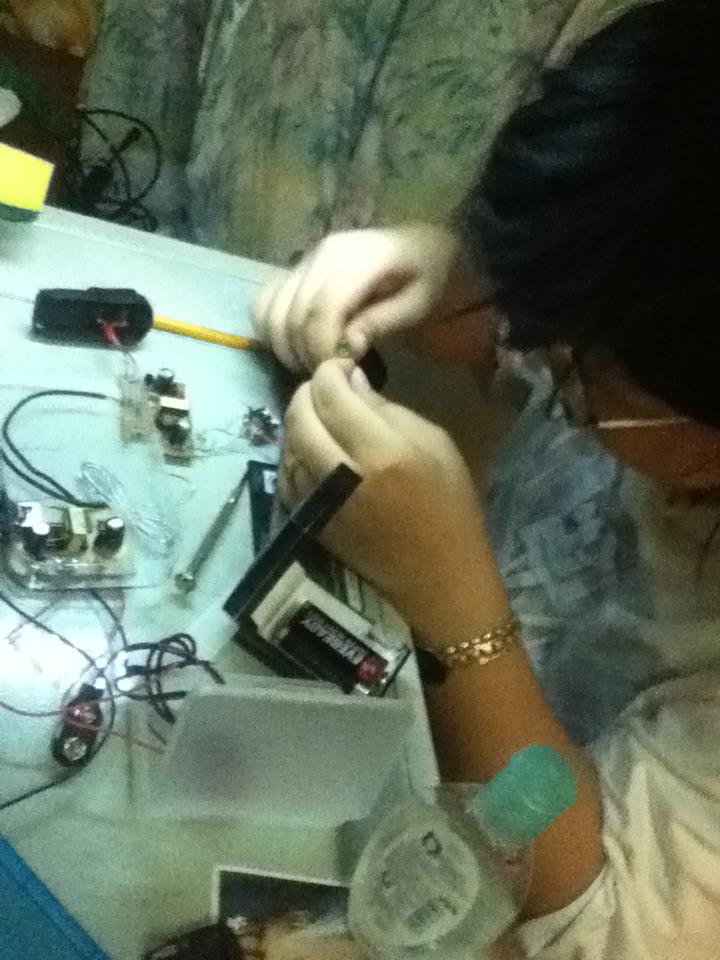
After gathering all the components and soldering them together with a technique I later learned is called ‘dead bug,’ I shoved it all in the box and attached the battery.
It was hideously clunky, but it worked.
Looking Back
A little more than 13 years later, I still look back at this project and wonder what would have happened if I had simply accepted the inconveniences as they were, like everybody else.
I probably wouldn’t have explored the electronics industry, much less pivoted professionally into it. I likely would have just bought a power bank a year or two later and thought, “Oh, I could’ve made something like this.”
 May Liu's Portfolio